Our Story with Honeysuckle Vine
From pulling weeds to weaving keepsakes — how one invasive plant became the center of a
quiet craft practice.
What began as garden maintenance slowly turned into something else. We started
collecting discarded vines, testing their flexibility, and learning which coils
held tension and which snapped under pressure. There was no manual. Each basket
emerged from trial, error, and the particular curve of the season's growth.
We are still learning. The vines teach differently each year, depending on rain,
frost, and how aggressively the plant spread. Our team treats this as a
collaborative process with the material, not a conquest of it.
Seasonal Foraging
We collect vines only during dormancy, when sap is low and bark peels cleanly.
Hand-Built Forms
Every basket is shaped without molds, so no two pieces share identical dimensions.
Material Honesty
We leave bark intact and never dye the vines — the color is what winter weather produced.
See What We Make
Browse our current collection of woven baskets and garden structures, each
shaped by the season that grew it.
View baskets
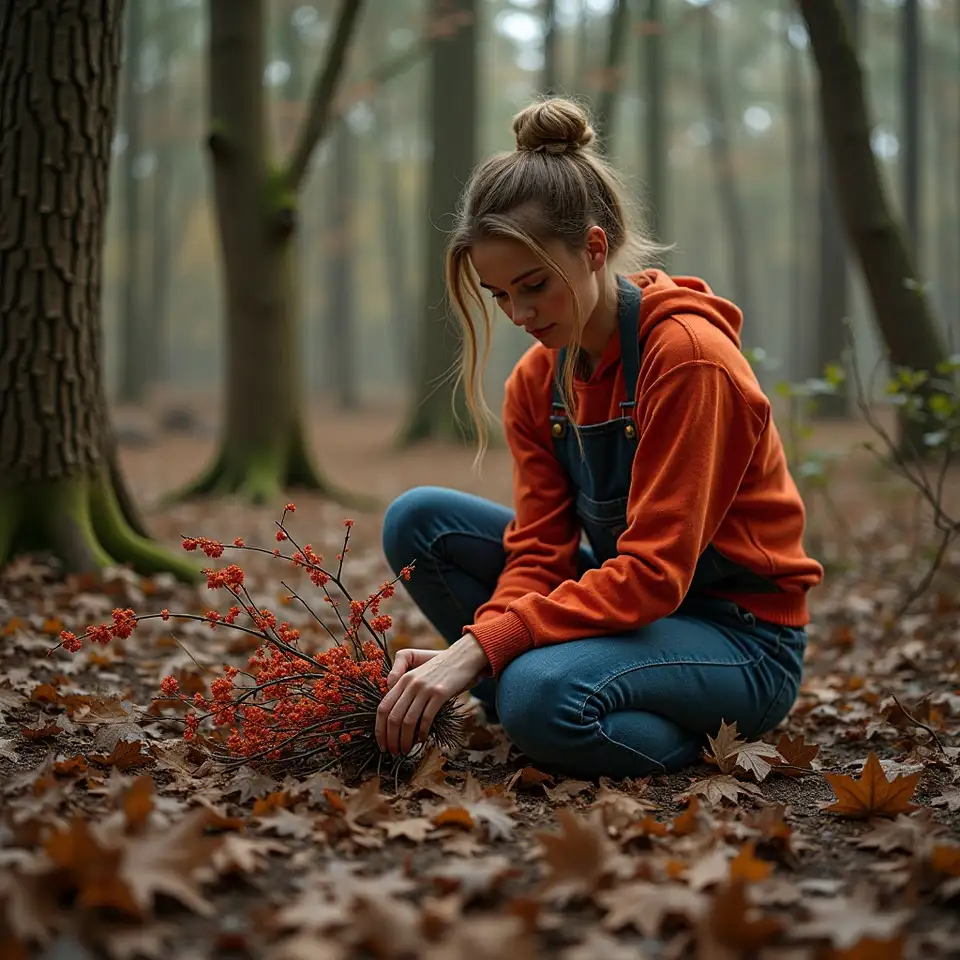
We Work With What the Land Offers, Not Against It
1
Respect the Source
We forage from overgrown areas where honeysuckle threatens native species. Removing it is conservation work. The weaving comes after.
2
Waste Nothing
Thick vines become basket ribs. Thin runners fill gaps. Even the bark we strip becomes garden mulch. Every part of the plant finds a use.
3
Preserve the Method
We document our techniques not to standardize them, but to show others how variable handcraft can be. There is no single correct way.
4
Embrace Imperfection
A kink in the vine becomes a handle curve. A split strand creates texture. We do not hide the material's history.
How We Got Here
A short history of mistakes, small breakthroughs, and the slow accumulation of knowledge.
-
First Pull
We removed honeysuckle from a local creek bank as part of a restoration volunteer day. The vines were thick, woody, and too interesting to compost. We took them home and tried bending them into a circle. Most cracked. A few held.
-
The Failed Coil
Early baskets were too rigid, then too loose. We learned that harvesting after the first frost changed everything — the vines became pliable without becoming brittle. Timing mattered more than technique.
-
First Shared Piece
A neighbor asked about a lopsided basket on our porch. We explained the material, the process, the failures. She wanted one anyway. That conversation taught us that people value the story inside the object.
-
Developing a Practice
We now forage across several sites each winter, track vine quality by location, and maintain a small workshop where pieces dry, cure, and take shape over weeks. The work remains slow. We prefer it that way.
What Guides the Work
Four principles that shape how we forage, weave, and relate to the material.
- 01
-
Sustainability
We harvest only where honeysuckle is designated invasive, never from protected ecosystems. Each collection supports local conservation goals.
- 02
-
Authenticity
We do not sand, stain, or seal the vines. The finished piece shows what the plant actually looked like when it grew.
- 03
-
Connection
We name the foraging site on each basket tag. The object carries a specific place and season with it. - 04
-
Imperfection
We leave tool marks, uneven weaves, and natural blemishes visible. These are signs of human attention, not defects to erase.